Beyond Sustainability: A Visual Framework for Ecological Civilization
“We cannot solve our problems with the same thinking we used when we created them,” said Albert Einstein, but what if it’s not just our thinking that must change, but who we are?
We live in an age of brilliant models and failing systems. We optimize, measure, and innovate, yet crises deepen. Why? Because we keep treating symptoms while ignoring the inner architectures that produce them. Beneath ecological collapse and social fragmentation lies something quieter but more profound: a crisis of meaning, connection, and self-awareness.
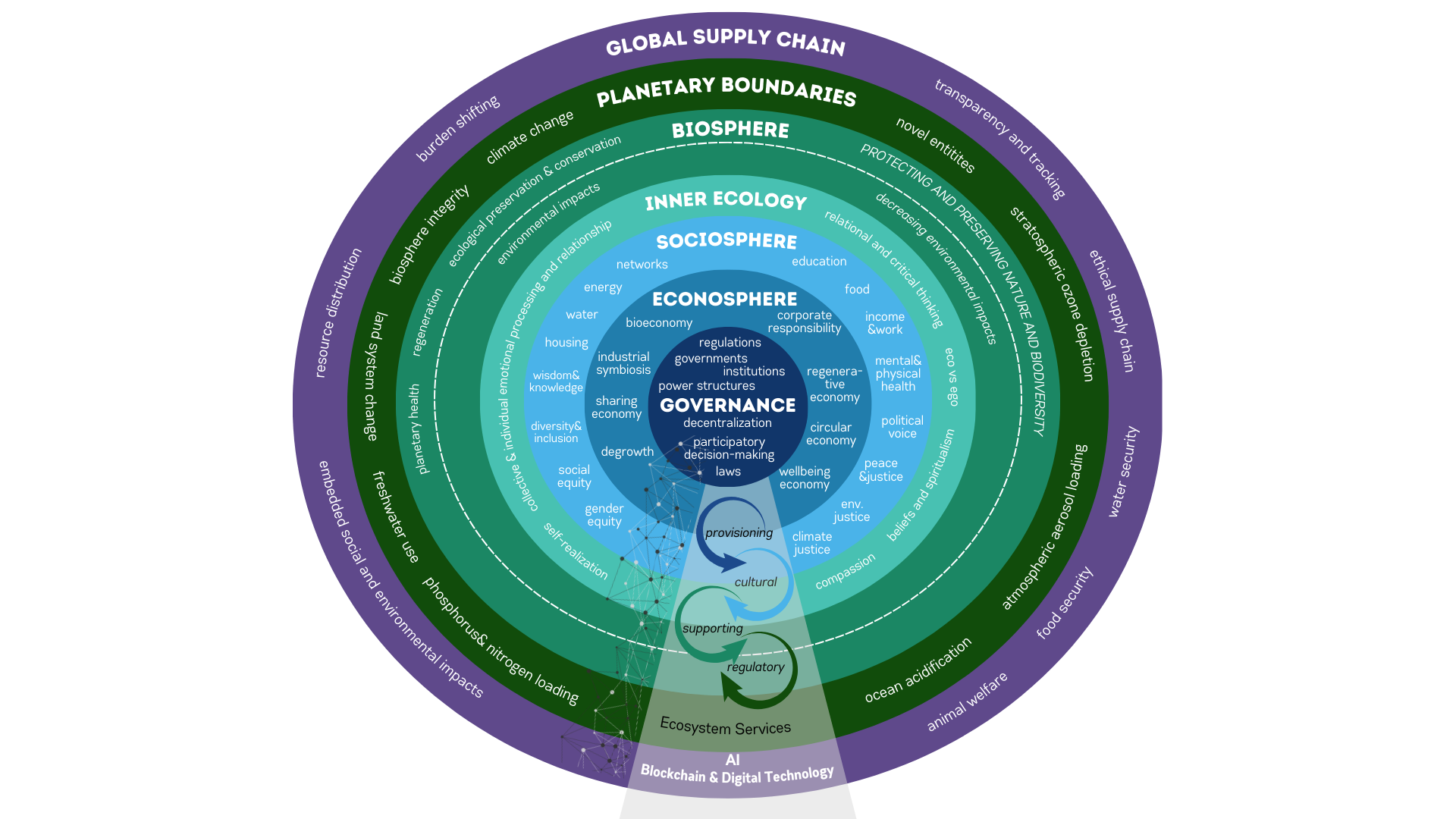
This framework invites a shift, from fixing the world “out there” to understanding the worlds within us that shape everything we build. It weaves together governance, economy, society, ecology, and something often left out entirely: our inner lives. Because systems are not separate from us, they are reflections of us.
What if sustainability isn’t just about reducing harm, but about cultivating wisdom? What if regeneration begins not only in ecosystems, but in identity, emotion, and relationship?
This is not a finished model. It’s a living map, an invitation to reconnect what we’ve fragmented, and to co-create a future rooted not just in solutions, but in deeper understanding.
Urban Greenery: The Future That's Right in Front of Us (But Just Out of Reach)
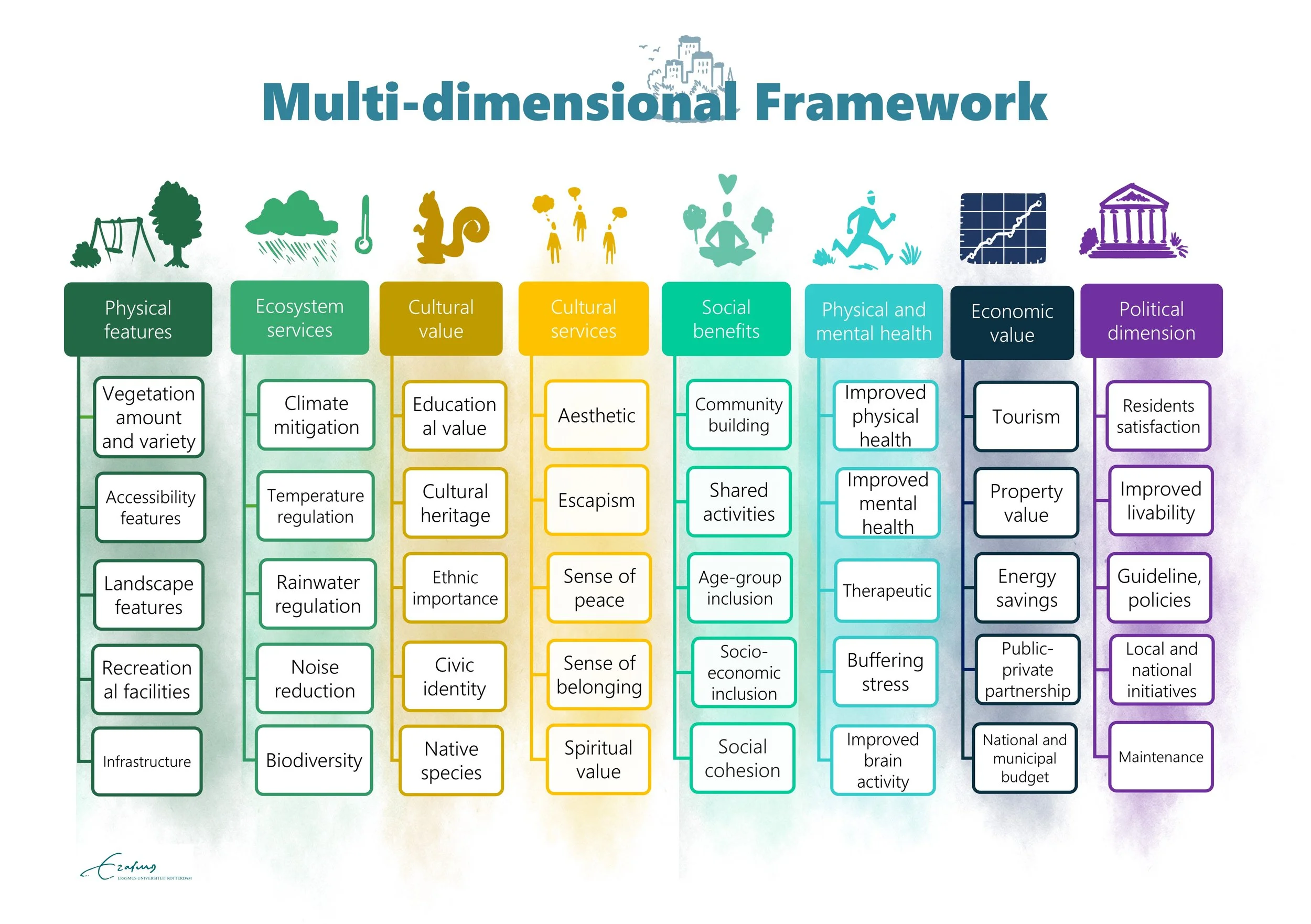
Green cities don't happen by accident – they require collaboration across disciplines and sectors. Architects, urban planners, policymakers, artists, businesses, and community members must work together to integrate greenery into the urban fabric. This can be challenging since we need to navigate multidisciplinary, interdisciplinary, and transdisciplinary collaboration for greener, healthier cities; i.e., we need to engage with many different areas, languages, goals and targets, wants and needs, realistic and prospective solutions. To help stakeholders navigate these challenges, we have designed a booklet and a framework to enhance individual and collaborative solutions. This has been brought about by a plethora of research from different disciplines as well as speaking to city officials. Our framework (Figure 3), in the image above breaks down the true impact of urban greenery across different areas to enable:
🔍 Zoom In: It allows each sector, department, company, and researcher to focus deeply on their specific role—whether it's ecosystem services, public health, economic value, or cultural significance. Experts can use it to strengthen their arguments, justify funding, and refine their impact.
🌍 Zoom Out: At the same time, it helps everyone see how their work connects with others. A scientist researching urban biodiversity can see how their findings support community well-being. A policymaker working on city budgets can recognize the financial benefits of investing in green spaces. A business leader can understand how sustainability efforts align with economic growth.
🤝 A Tool for Collaboration: This framework doesn't just categorize benefits—it creates common ground. It encourages professionals from different backgrounds to speak the same language, making it easier to align goals, share resources, and collaborate across disciplines, sectors, and departments.
Sustainability Renaissance: embracing strong sustainability in the 21st century and leaving the weak sustainability in the past.
“Sustainability” is everywhere, on labels, in policies, in promises. But what if the word we trust to guide our future has quietly lost its meaning?
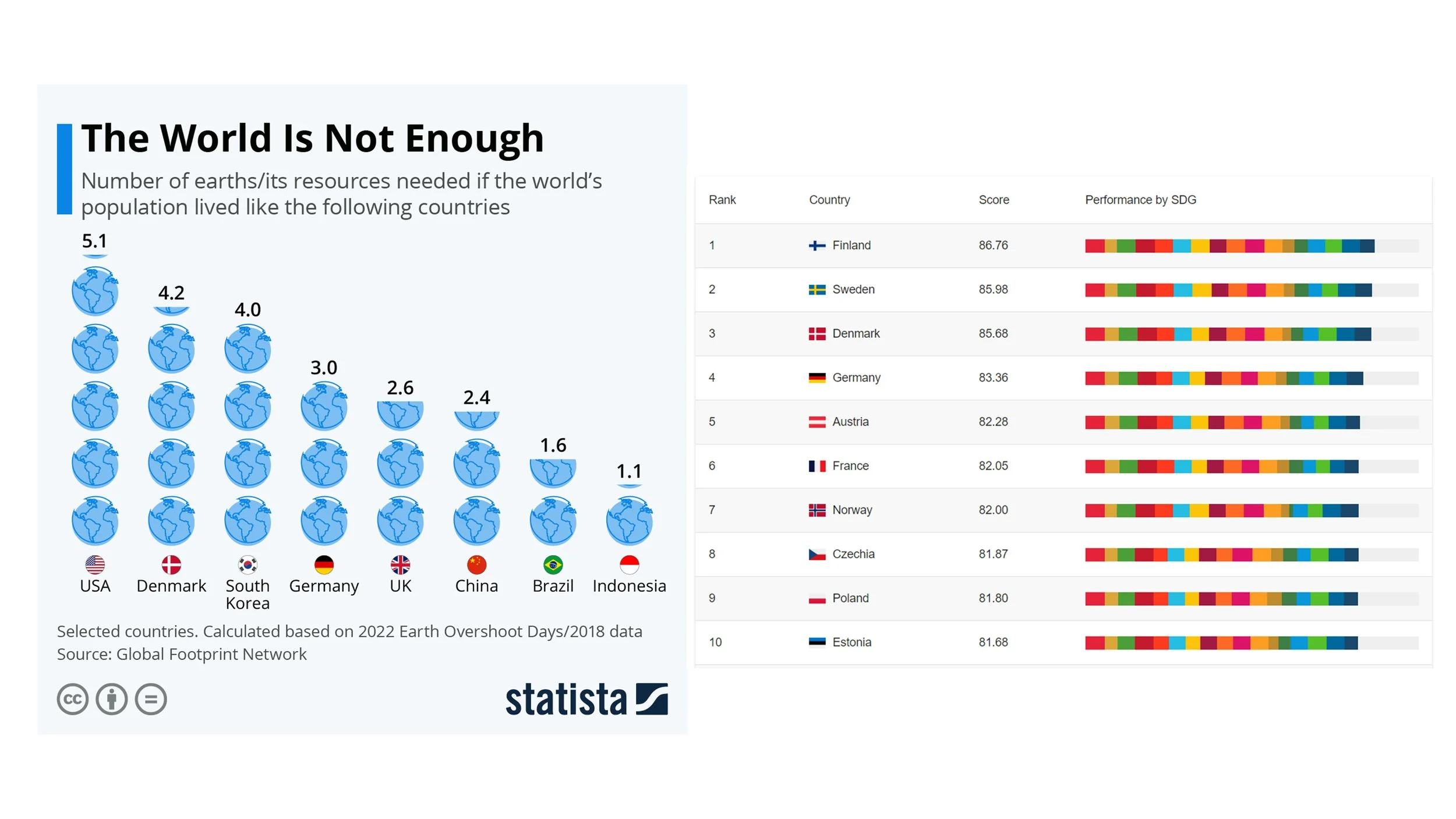
We are told we are progressing, yet the evidence tells another story. We have crossed multiple planetary limits, consume far beyond what Earth can regenerate, and still call it “development.” The problem isn’t just failure, it’s confusion. Sustainability has been diluted into something comfortable, measurable, and marketable.
At the heart of this confusion lies a quiet divide: weak vs. strong sustainability. One assumes we can replace nature with technology, that losses can be offset, that growth will save us. The other recognizes a harder truth, nature is not interchangeable. Some losses are irreversible. Some boundaries cannot be negotiated.
A forest is not just timber. It is climate regulation, biodiversity, culture, and life itself. When we reduce it to a resource, we don’t just simplify reality, we distort it.
This is where a Sustainability Renaissance begins. Not in better metrics or greener products, but in redefining what sustainability truly demands: respecting limits, restoring systems, and embracing complexity.
Because sustainability is not about doing “less harm.”
It is about learning how to live well, within the means of a living planet.