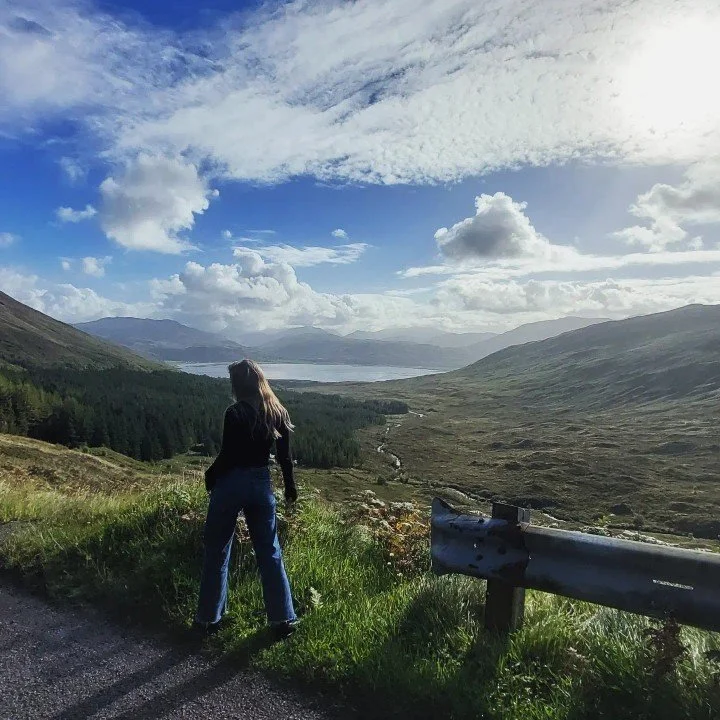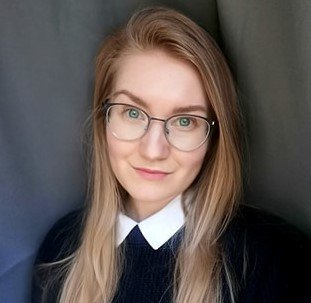
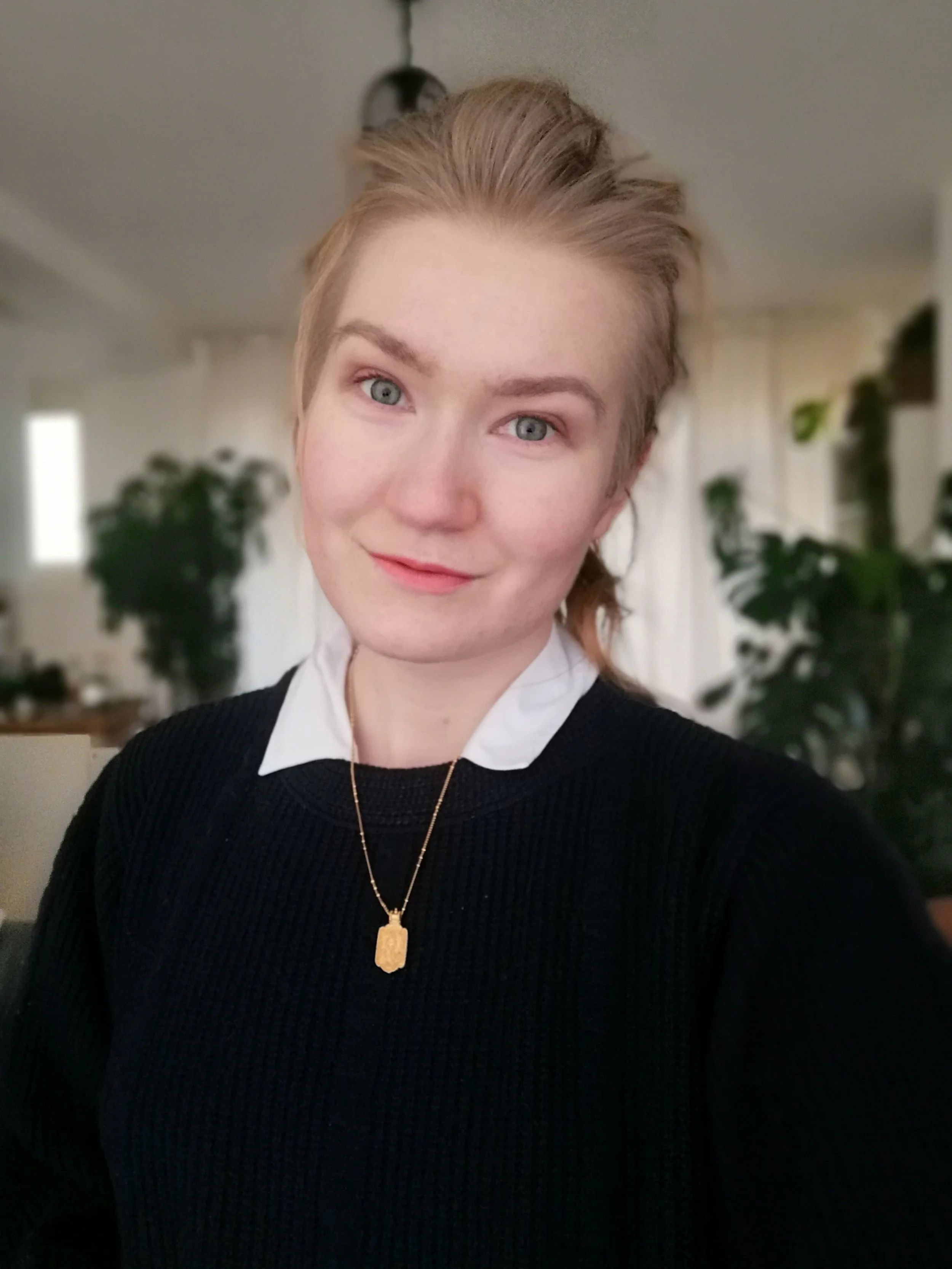
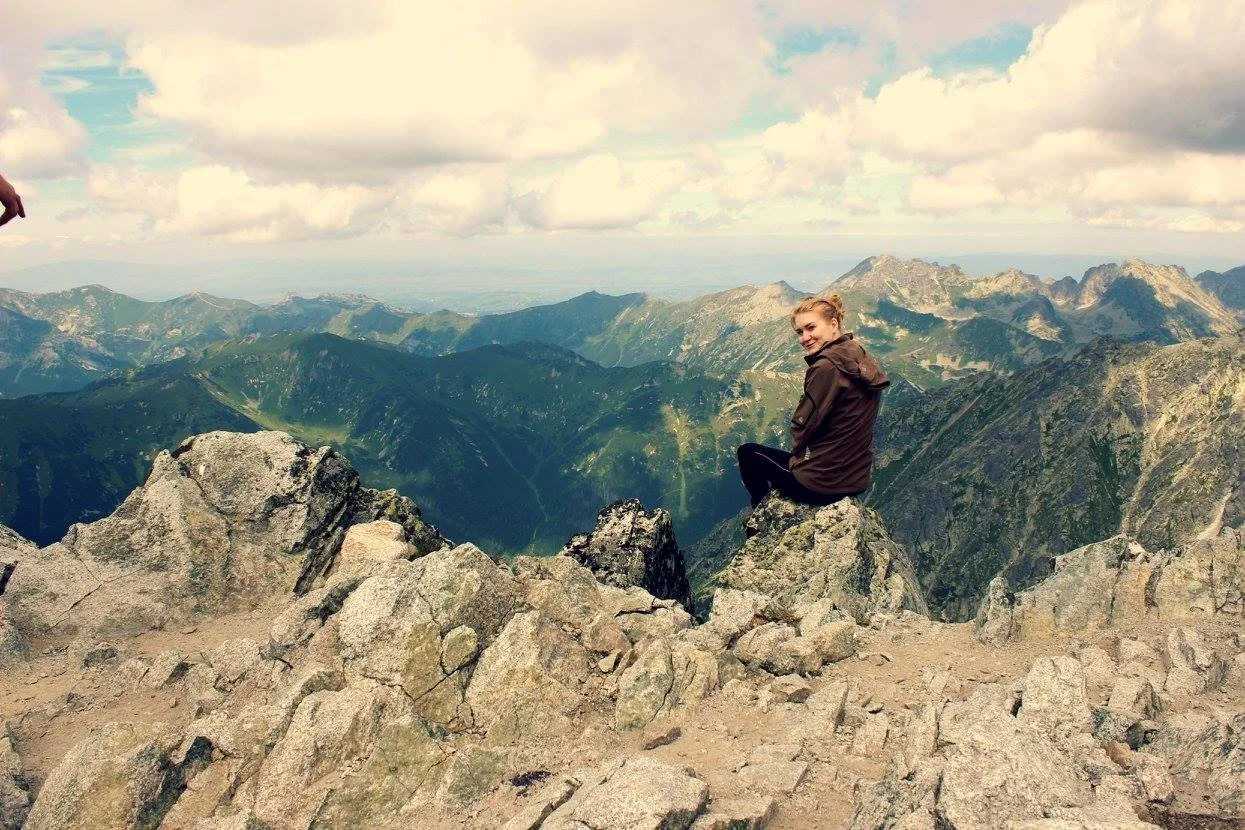
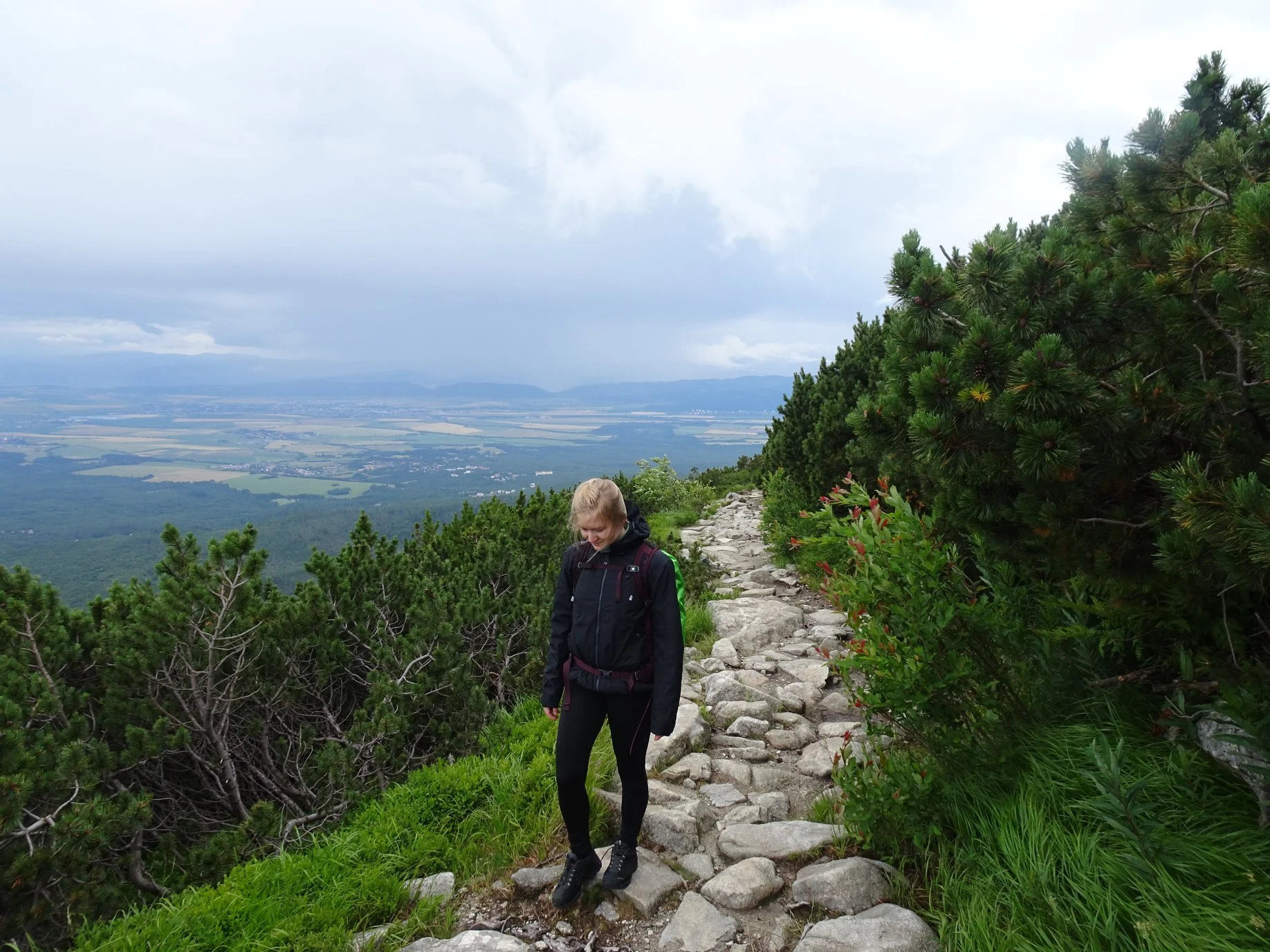
Hi, I’m Dominika.
I am a transdisciplinary scientist. What does it mean? I have a background in several disciplines, from chemistry and technology to life-cycle assessments, business, and project management, as well as engaging wider stakeholders. I am a sustainability engineer. I am like a translator between departments and disciplines, making sure we understand each other and that important things are not lost, while at the same time enhancing sustainability, circularity, and regeneration. I translate complexities into easy-to-understand connected blocks, visuals, and workshops.
HOW I CAME TO BE A SCIENTIST
I am from Košice, the second-largest city in Slovakia. When I was a child, I felt a deep sense of wanting to help. At first, I contemplated becoming a psychologist and helping people, but I quickly realised that was not something I wanted to do by the time I was 13. Then, I decided to help the planet and give a voice to the voiceless. I thought that making actionable environmental research would become the next big thing. But I knew I would need to get a PhD from an internationally known university. And I soon decided on Denmark, as education was free and taught in English, and the country had a respectable environmental and social well-being approach.
My high school helped me in this goal, as it was a scientific French gymnasium. We studied mathematics, biochemistry, biology, chemistry, and physics in French. While English was my third language, I have made an effort to read books, watch movies, and listen to interviews online to enhance my skills beyond what was needed in school, keeping my eyes on my goal.
It would be tricky to go to Denmark right away, so I decided on a Bachelor's in environmental engineering in Slovakia. I looked at all curricula in the country (back then, there were only three universities providing these studies) and, despite having the option to stay in my hometown, I moved to the middle of the country, the city of Zvolen, as it provided a curriculum close to what I wanted to do. I managed to secure a Merit scholarship for all years and finished in the top 5%, receiving the highest marks throughout my studies and for my Bachelor's Thesis on the health effects of traffic noise, with both practical (collaboration with the Technical University of Kosice) and theoretical contributions.
SLOVAKIA
-
DENMARK
-
NETHERLANDS
-
UK
-
SLOVAKIA - DENMARK - NETHERLANDS - UK -
From Slovakia to MASTERS Denmark 2015-2017
I took a risk and applied only for master's degrees in Denmark. I was successful and got into all of them. Finally, I decided to go to the University of Southern Denmark to continue Environmental Engineering studies. It was a stark difference in university experience. While Slovakia has an individualistic and theory-driven style, the Danish style prioritises teamwork and collaboration to simulate real-life experiences. Suddenly, my grades were no longer tied only to my own work, but teamwork, and I gained hands-on experience in project management and worked on real cases thanks to strong University-Industry relationships. Some of my classmates later became my colleagues in Denmark and the Netherlands (the world is indeed a small place), and one of my guest teachers became a crucial part of my PhD.
For my master's thesis, as is usual for me, I studied something completely different to my curriculum and included both practical and theoretical knowledge. I have cultivated microalgae in the lab, studying their ability to upgrade biogas (as the mixture contains CO2 and CH4, but only the latter is needed for gas supply, while algae prefer CO2) and to extract omega-3 fatty acids. I looked at market research, health benefits, and industrial symbiosis capabilities. It was long hours and long weekends, as microalgae needed to be taken care of and didn't care about my weekends. But my hard work paid off, and I finished with the highest grades (12/A).
Because of this work, I became confident to continue my research career in Denmark. And when applying for many PhDs didn't work, I took another approach and applied for an open-PhD position – you need to suggest and design the basis of PhD research yourself.
Other work during my Masters
2017-2019 Project manager at Repair Cafe Odense
Non-profit organisation focused on helping people repair their items, from bicycles to textiles and electronics, at events. My roles were supporting the events and later recruiting interns, managing interns, managing marketing projects, quality control, and increasing public recognition
2016 R&D Trainee at UNIBIO
A biotech company specializing in single-cell protein production. Developing industrial symbiosis strategies and implementation. Designing Industrial Symbiosis flow and marketing materials
2016-2017 Student Instructor in Life Cycle Assessment at the University of Southern Denmark
Counselling students, guiding group projects, and assisting with the SimaPro software, as well as building their databases.
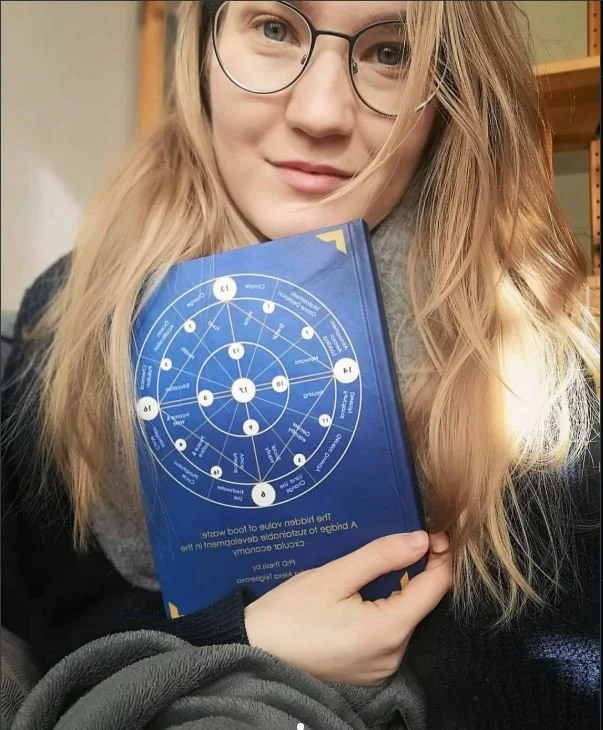
PHD JOURNEY 2018-2021
I was lucky to be selected to be part of the Horizon 2020 project DECISIVE at Aarhus University (Decentralised management Scheme for Innovative Valorisation of urban biowastE). This multimillion-euro and multinational project brought together many European countries. Our Danish team was mostly composed of PhD, young researchers and postdocs, and I continued my work in multinational and multi-disciplinary teams. And my focus switched from microalgae to food waste products and industrial symbiosis.
During my three years, I wrote and co-wrote 6 scientific articles, presented at conferences, collaborated with companies, and tried my hand at funding acquisition, teaching, and even risk management, turning failures into strengths. But my highlight was continuing my journey with Dr Lorie Hamelin, whom I met during my master's. She was now leading her own project in France as part of the Make Planet Great Again scheme, CAMBIOSCOPE (Carbon Management & Bio-resources Strategies for Scoping the Transition towards low fossil Carbon). I even had the chance to visit her in France for several months and experience, hands-on, another women-led small research team.
I was lucky to be able to shape my PhD. I have come across Strong Sustainability, which is how I viewed sustainability from the start and something about things called "sustainable" didn't sit well with me. Now I have theoretical backing for why environmental impacts, a long-term vision for protecting and regenerating nature, and justice and well-being need to come together. And I integrated this as much as I could into my PhD, with the aim of continuing this work, as I was surprised that it was not applied widely in academia and science.
I have earned my doctorate and could now add PhD or Dr proudly to my name. This experience and my interactions with my colleagues have led me to explore Postdoctoral options, but I have a feeling that Denmark is not my final destination.
Other PhD projects
Designing and teaching a circular bioeconomy PhD course
Designing, teaching and coordinating an online-based Circular Bioeconomy PhD Course for both academia and industry.
From Denmark TO NETHERLANDS 2021-2024
Although I was unsuccessful in one of my interviews for postdoctoral positions in the Netherlands, it made me visible to the right people, and I was headhunted to lead a project on circular product-service systems for infrastructure (roads, bridges, road lighting, and guiderails) atDelft University of Technology (TU Delft). The project, Circular Road (De Circulaire Weg, included another opportunity: working with many government bodies and industry on a practice-oriented project, willing to explore many different solutions. Here, I needed to combine my previous knowledge of LCA, environmental data and technology, and circularity, while also exploring stakeholder engagement and management at a higher level, and including qualitative methods such as surveys and interviews to identify barriers, enablers, and recommendations in a format engaging for wider stakeholders, not just academia. And while departure from food seems like a faraway subject, what played into my hands is that both my parents are from the construction industry, and I had enough understanding of the field from many conversations with my parents over the years, particularly my mother, who was a Civil Engineer (back in the era when very few women were). The project resulted in two articles, one report, and the successful continuation of the program with further funding.
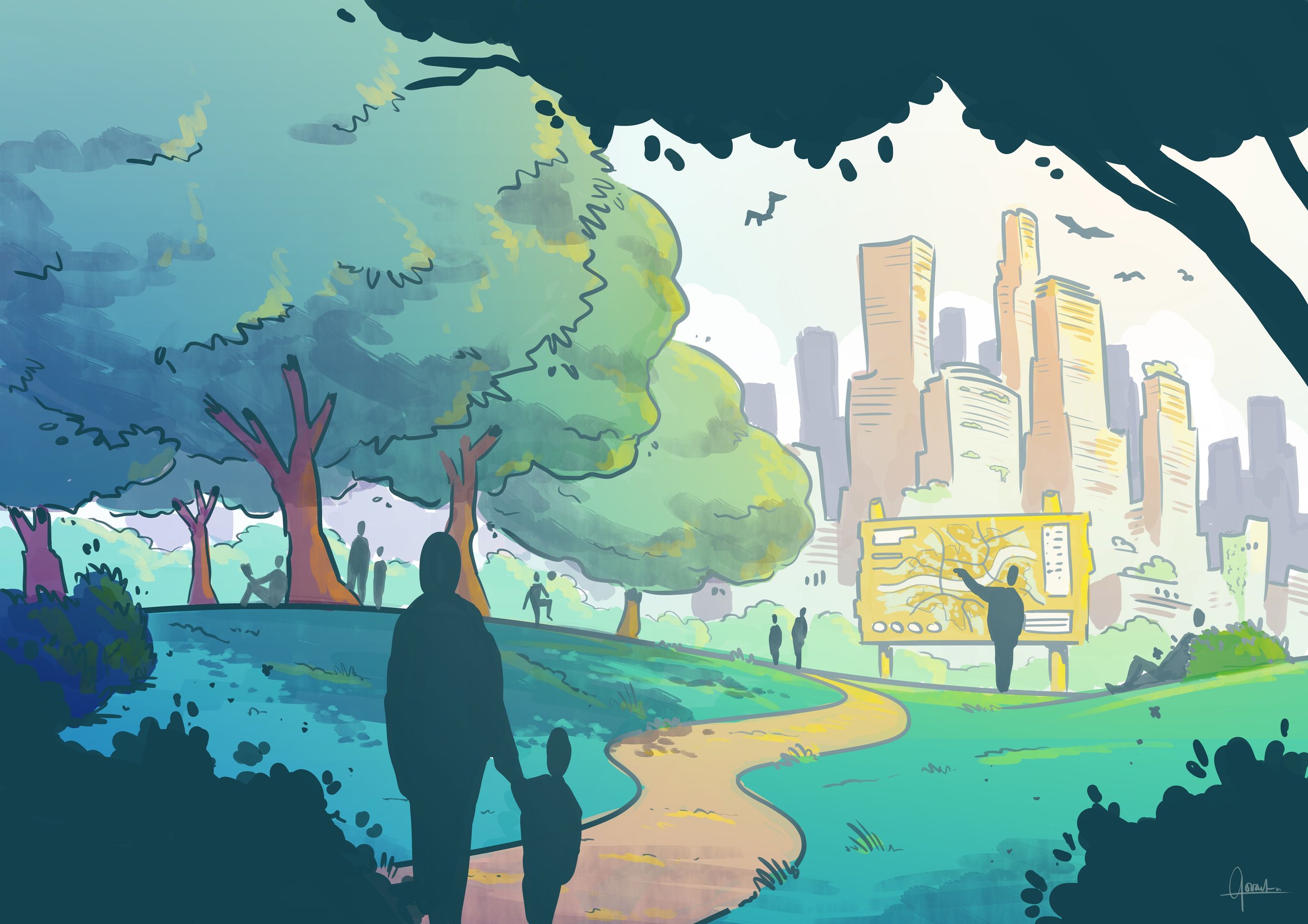
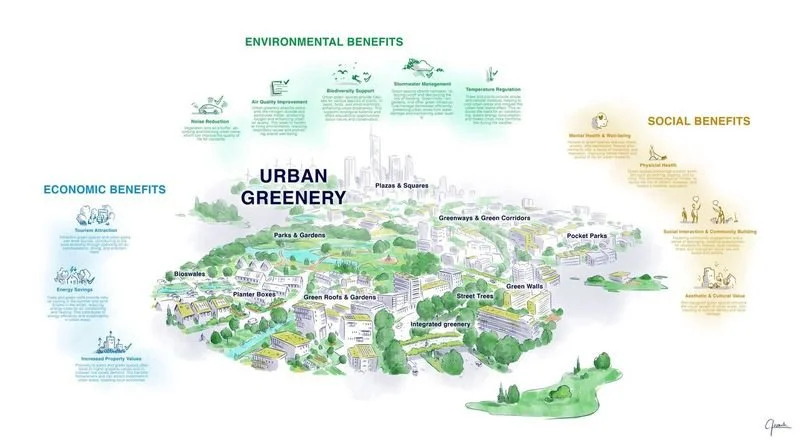
Next, I collaborated on the Inclusive Wise Waste Cities project at Erasmus University Rotterdam. Here, I was looking at Urban Greenery options, embedding Strong Sustainability thinking further across multiple disciplines and aligning it with city departments. I have connected ecosystem services, economic aspects, health research, human well-being and more. And while work on the articles is never-ending for academics (and this one is ongoing), urban greenery is such a hands-on topic that I decided on a public-facing output and created multiple visuals and a comprehensive short-format booklet.
At the same time, I have also been teaching and developing Sustainability materials, incl. guest lectures at Business and Technical programs and project-based assessment. Teaching Sustainable Cities master course. I have also received the University Teaching Qualification Certificate in January 2024
I was supervising five master's theses, which was an amazing and rewarding experience with all students finishing with high grades. I have also collaborated with the City Doughnut Economics network in the Netherlands.
The fellowship in the United Kingdom 2024-now
I have explored many options for my postdoctoral work, but one has caught my eye immediately. Before I came to the Netherlands, my aim was set on the UK. I was attracted to its nature, their farming history. I have read many excellent research papers from the UK, and whenever I travelled there, I felt at home (and Scottish history reminded me of parts of Slovakian history).
The research fellowship at Manchester Metropolitan University included something that I have not seen before: strong sustainability in the job description. Once again, I had an opportunity to shape my own research. I have long contemplated being more involved in Business research, as, despite not liking economics studies, I see it as a place of transformation, and my aim since childhood has been to have an impact on the real world. I was lucky again and got the post, where I am now, exploring how Strong sustainability, circularity, and regeneration are understood in science and integrated in businesses. And more publications and collaborations are yet to come…